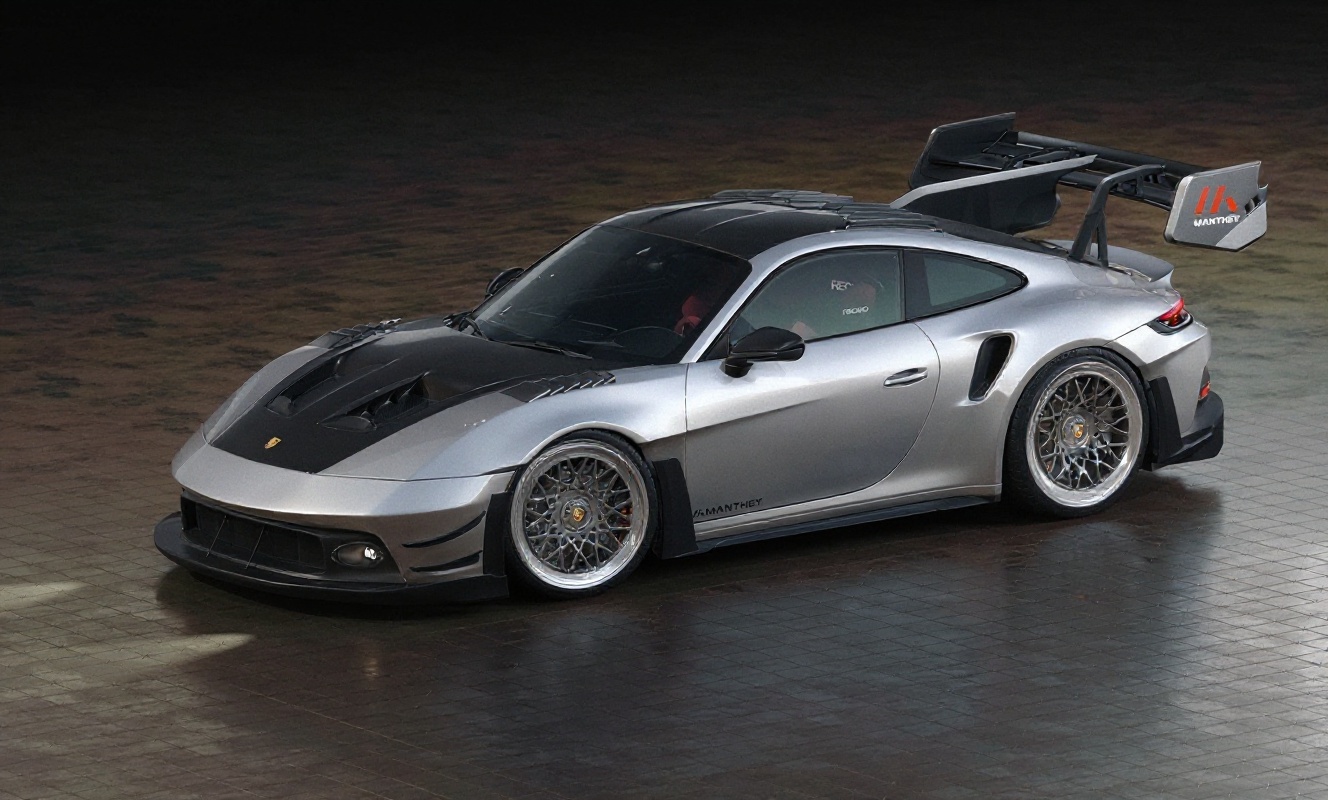
由 Flux Kontext Pro 生成的 FLUX AI 图像
迅速的
Transform this Blender-rendered car image into a highly realistic automotive photograph. Preserve the exact vehicle design, body proportions, body panels, headlights, taillights, grille, wheels, tire dimensions, ride height, stance, camera angle, perspective, composition, and background layout from the original image. Do not redesign, modify, or replace any part of the car. Remove the artificial CGI appearance and make the vehicle look physically present in the real environment. Create realistic automotive paint with natural clear-coat depth, subtle orange-peel texture, fine surface micro-texture, accurate metallic flake behavior, physically correct reflections, soft highlight roll-off, and realistic variation across curved body panels. Avoid perfectly smooth computer-generated surfaces. Add realistic glass materials with correct transparency, slight tint, natural reflections, subtle interior visibility, and accurate thickness around the edges. Make the headlights and taillights look like real production components with layered lenses, internal reflectors, fine optical details, and realistic refraction. Improve the tires with realistic rubber texture, fine molding marks, subtle sidewall lettering, natural contact deformation, and slight road dust. Add believable brake discs, calipers, wheel-barrel shadows, minor brake dust, and realistic metallic surfaces. Create accurate contact shadows beneath the tires, natural ambient occlusion around the wheel arches and underbody, realistic light bounce from the surrounding environment, and physically believable integration between the car and the ground. The vehicle must not look like it is floating. Use realistic photographic lighting with slightly soft natural contrast, controlled highlights, gentle shadow detail, and imperfect real-world exposure. Reflections must follow the surrounding environment accurately and should not look artificially sharp or mirror-like. Make the image look as though it was photographed on


